
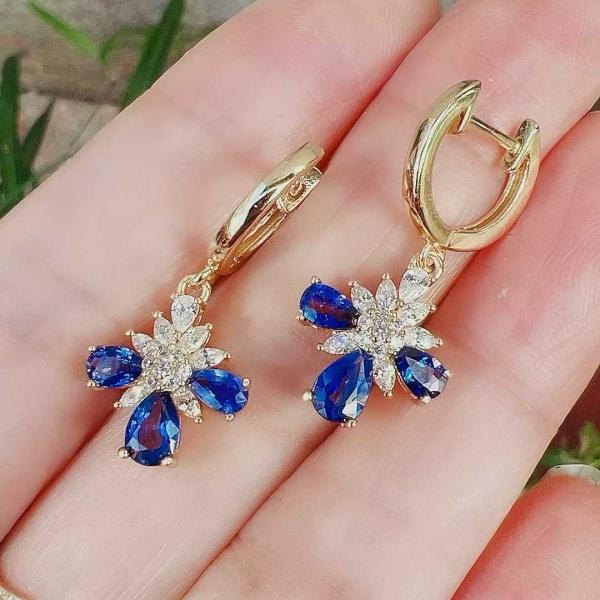
Let’s be honest. When you hear a gem dealer say “untreated” and see the price tag, your first thought is probably, “This must be better.” And when you hear “heated,” a little warning bell might go off. It sounds… altered. Maybe even fake.
I get it. For years, even I had it wrong. The truth is, this entire “treated vs. untreated” debate is the most misunderstood concept in the gemstone world. Getting it right isn’t just about knowledge; it’s about not overpaying for a label and not undervaluing true beauty.
So, let’s clear the air. What does “heated” actually mean?
Forget images of torches and melting rocks. Think of it as a gentle, ancient art form. It’s more like putting the gemstone in a precision oven under very specific conditions. This traditional practice, sometimes called “thermal enhancement,” has been around for centuries. Its sole purpose? To unlock a gemstone’s hidden potential.
Most gemstones are born under immense heat and pressure underground. But by the time they reach us, they’re often not ready for the spotlight. A sapphire might be a dull, murky blue. A ruby might have an overpowering purple tone. Heating simply finishes what nature started. It evens out the colour, deepens a hue to a more desirable “royal blue” or “pigeon’s blood” red, and can improve clarity. The change is permanent and stable. The gemstone you buy is the gemstone you’ll have forever; it won’t fade or revert.
Now, what about “untreated”?
This means the gemstone has gone from the mine, to the cutter, to your hands with zero human intervention after its formation. No heat, no nothing. It’s a rare snapshot of nature’s unedited work. Because perfection from the earth is incredibly scarce, these stones command a significant premium. You are paying for that profound rarity and a pure, collector’s-state naturalness.
Here’s the critical part that changes everything: Heating is considered a fully acceptable, standard practice in the global gem trade.
Major laboratories like GIA (Gemological Institute of America) or GRS will issue a report for a heated stone that clearly states “NATURAL SAPPHIR” or “NATURAL RUBY” right at the top. In the comments, they will note “indications of heat treatment.” This is worlds apart from a “treated” stone, which implies methods like fracture filling (where glass is pumped into cracks), diffusion (adding colour only to the surface), or dyeing. Those treatments drastically reduce value and durability. Heating does not.
So, how do you choose? It’s about your goal.
Choose Untreated if: Your priority is ultimate rarity and investment-grade collection. You value the story of a gem that is perfect exactly as it was found. Your budget aligns with the premium for this exclusivity.
Choose Heated if: You want the most beautiful stone for your budget. You desire a vibrant, eye-catching colour and excellent clarity but don’t want to pay the “untreated” premium for a visually similar result. It is the smart, value-conscious choice for a stunning piece of jewellery you’ll wear and adore.
The Bottom Line:
Don’t get caught up in the jargon. Both are natural gemstones. One (untreated) is a rare, untouched masterpiece. The other (heated) is a masterpiece gently polished by an ancient craft to reveal its full glory.
Your job isn’t to be a lab technician. Your job is to find a trustworthy dealer who provides a reputable laboratory report. Read it. Understand it. Then, look at the stone itself. Does its colour speak to you? Does its fire captivate you?
Whether you fall for the pristine rarity of an untreated stone or the brilliant beauty of a heated one, you are choosing a wonder of the natural world. Make your choice based on fact, not fear, and find the gem that truly resonates with you.
Looking for a Practical Micro-Custom Jewelry Solution?
We help designers and small brands work with natural-origin enhanced colored gemstones through sample-first production and controlled processes.
Explore Custom Jewelryhttps://paktivo.com/custom-jewelry/
Request a Quotehttps://paktivo.com/contact/
https://shorturl.fm/mXwlx